
A step-by-step guide from a Rugby World Cup commentator
By Dallen Stanford, Rugby World Cup commentator and founder of the Broadcast Academy

The first time someone handed me a microphone, I had very little idea what I was doing. That was 15 years ago. I had passion and I knew the game, but the craft of broadcasting (the preparation, the rhythm, the storytelling) was something I had to learn on the job.
Since then I’ve called the 2023 Rugby World Cup in France, the 2019 Rugby World Cup in Japan and the 2018 and 2022 Sevens World Cups, and I spent a decade traveling the world on the Sevens World Series. My calls have aired on ESPN, CBS Sports Network, Fox Sports, NBC and Peacock.
Nobody is born knowing how to do this. Every commentator you admire had a first match, with nerves and a stumble over a name. The good news is that commentary is a learnable skill. Here’s the path I’d follow if I were starting today.
What does a rugby commentator do?
Rugby commentary isn’t one job. It’s three, and the best broadcasts have all three working together.
- Play-by-play (lead commentator). The voice that describes the action as it happens. If someone closed their eyes, they should still be able to picture every moment of the match.
- Color analyst (expert commentator). Explains the why behind the play: the tactics, the patterns, the coaching decisions. Often a former player or coach, but it doesn’t have to be.
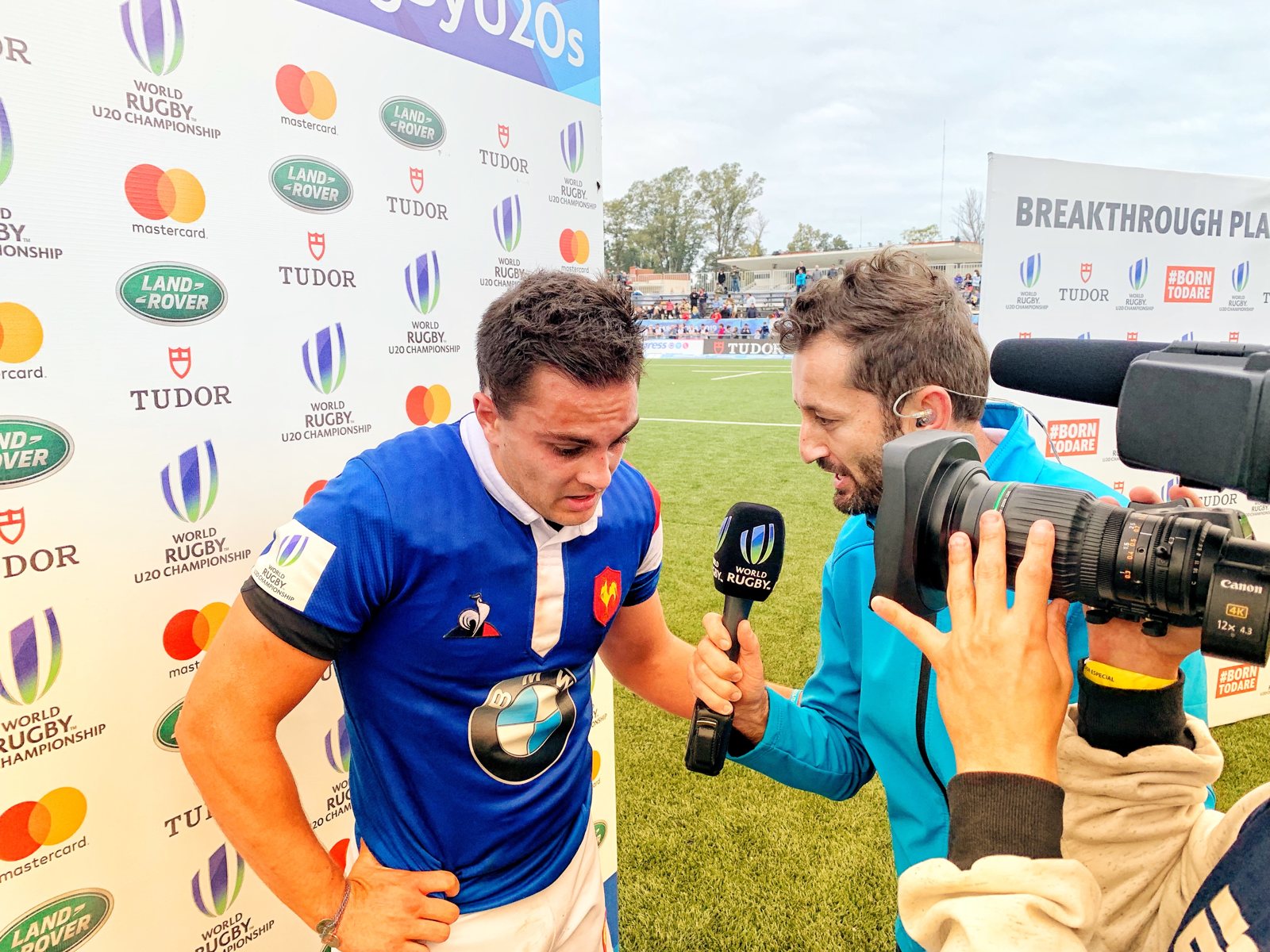
- Sideline reporter. Pitchside with injury updates, substitutions and interviews before the match, at halftime and after the final whistle. It’s one of the best ways into the industry.
Work out which role suits you, but practice all three. Broadcasters value people who can step into any seat.
Do you need a degree to become a rugby commentator?
No. There’s no single qualification. Some commentators come through journalism or radio, some are former players, and plenty simply started calling club matches and got better every week. What every good commentator does have is deep knowledge of the game, solid preparation habits and a lot of practice behind the mic.
Step 1: Know the game, and the competition you’re calling
You need to understand rugby well enough to explain it in real time. Laws and tournament rules change, so make it a habit to check the rules for each competition before you call it. Watch matches with a commentator’s eye: notice the patterns, the set-piece battles and the moments that change a game.
Step 2: Prepare like a professional
Preparation is what separates good commentators from great ones. The broadcasters who sound effortless did the work before kickoff. For every match I:
- Go deep on both squads. Every player in the 23, not just the starters: position, number, key players, late changes, milestones like a 50th cap.
- Find the story. What’s at stake? What’s the history between these teams? Which players and coaches have a storyline? Walk in with five or six stories ready to use.
- Nail the pronunciation. A player’s name matters to them, their family and their community. Look up every name you’re unsure of before the match and write it phonetically on your notes.
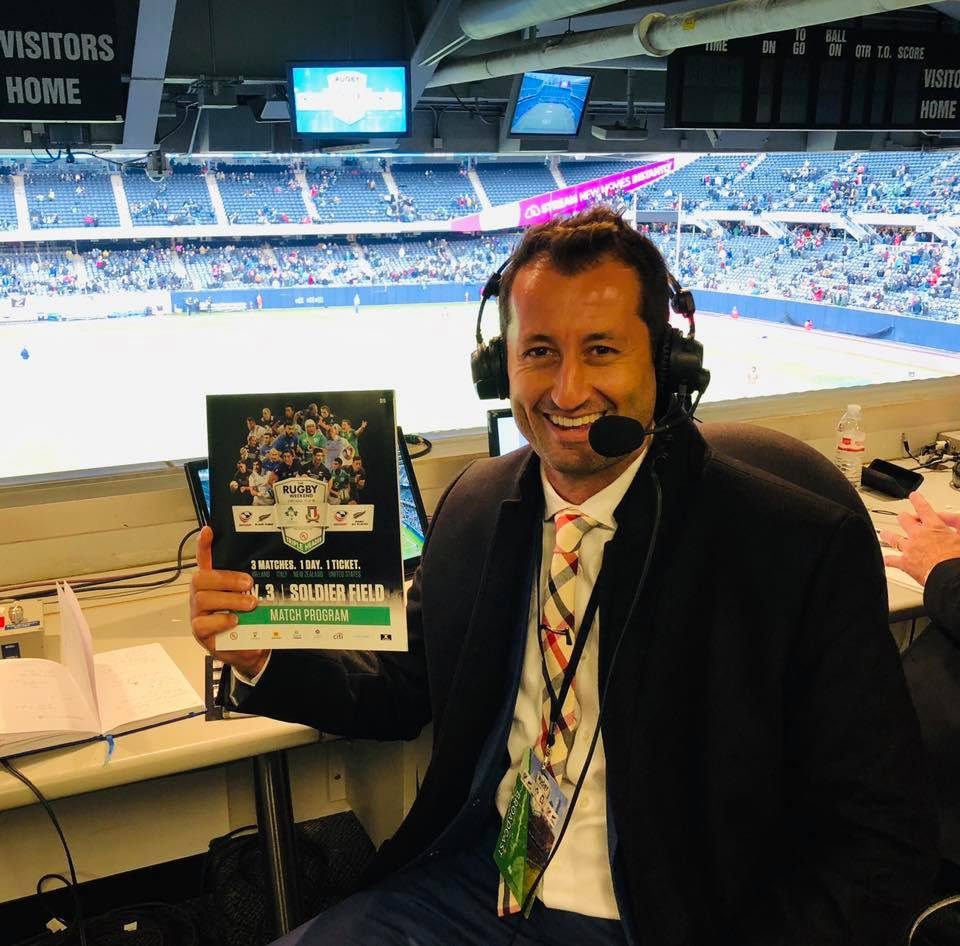
- Know the run sheet. Every professional broadcast follows a running order: when you’re on air, when the anthems are, when the breaks fall.
Step 3: Practice play-by-play every week
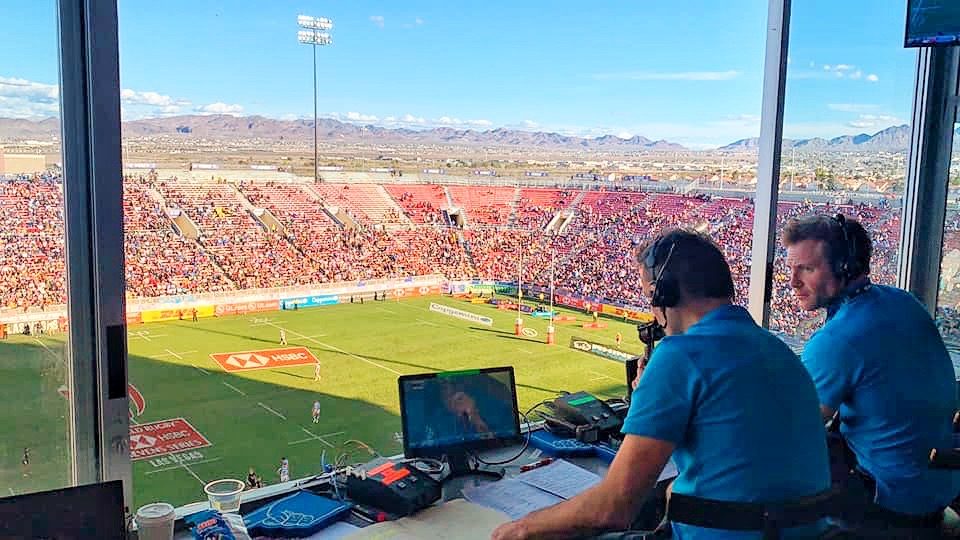
Play-by-play is the hardest skill in broadcasting. You watch, process, speak and think at the same time, with no second takes. Keep it simple with a framework: Action, Player, Outcome. What’s happening, who’s doing it, and what’s the result.
Then learn when to stop talking. When a try is scored, say the big line and let the crowd tell the story. Silence is a commentator’s most underused tool.
The easiest way to practice: turn down the sound on a match replay, record yourself calling it, and listen back. You’ll hear the five mistakes almost every beginner makes:
- Over-talking and filling every silence
- Being too vague (“he runs, he passes, they score”)
- Filler words like “um” and “you know”
- Forgetting to update the score and the clock
- Talking over your co-commentator
Step 4: Look after your voice
Your voice is your instrument. Stay hydrated, warm up before every session, rest after long broadcasts and don’t shout off air. Projection isn’t volume, it’s breath support, which is why I always stand when I commentate. Before a big tournament, I skip the drinks so my voice is fresh for the weekend.
Step 5: Build your commentary demo reel
A demo reel is your broadcasting resume. Keep it short, open with your best call, and show range: a big moment, some build-up play and, if you can, a piece of analysis or an interview. Update it as you improve.
Step 6: Get your first matches
Start small and build reps. Call club matches, school and college games, local livestreams and community radio. Share clips on social media, ask for feedback and connect with other commentators. Opportunities often come through the people you meet along the way.
Can you become a rugby commentator in your own language?
Yes, and it’s a real opportunity. Rugby keeps growing around the world, and broadcasters need voices who can call the game in French, Spanish, Italian, Japanese, Portuguese, Afrikaans, Chinese, Georgian, Hindi, Polish, Romanian and many other languages. The skills are the same in every language: preparation, rhythm, storytelling and knowing when to let the moment breathe.
Your Broadcast Academy pathway
I built the Broadcast Academy to give you the roadmap I didn’t have. Broadcast Academy graduates aged 14 to 70, from more than 30 countries, have taken this step, and over 35 have gone on to paid commentary work. Start wherever fits you best:
Frequently asked questions
How long does it take to become a rugby commentator?
It depends on how often you practice. Commentators who record and review themselves every week improve fastest. Your first paid opportunities usually come after you’ve built a reel from real matches.
Do I have to be a former player?
No. Former players often move into the analyst role, but play-by-play and sideline reporting reward preparation, voice and communication skills more than playing experience.
What equipment do I need to start?
A computer, a decent microphone and an internet connection are enough to practice on replays and record your first reel.