Advice from a Rugby World Cup commentator
By Dallen Stanford, Rugby World Cup commentator and founder of the Broadcast Academy
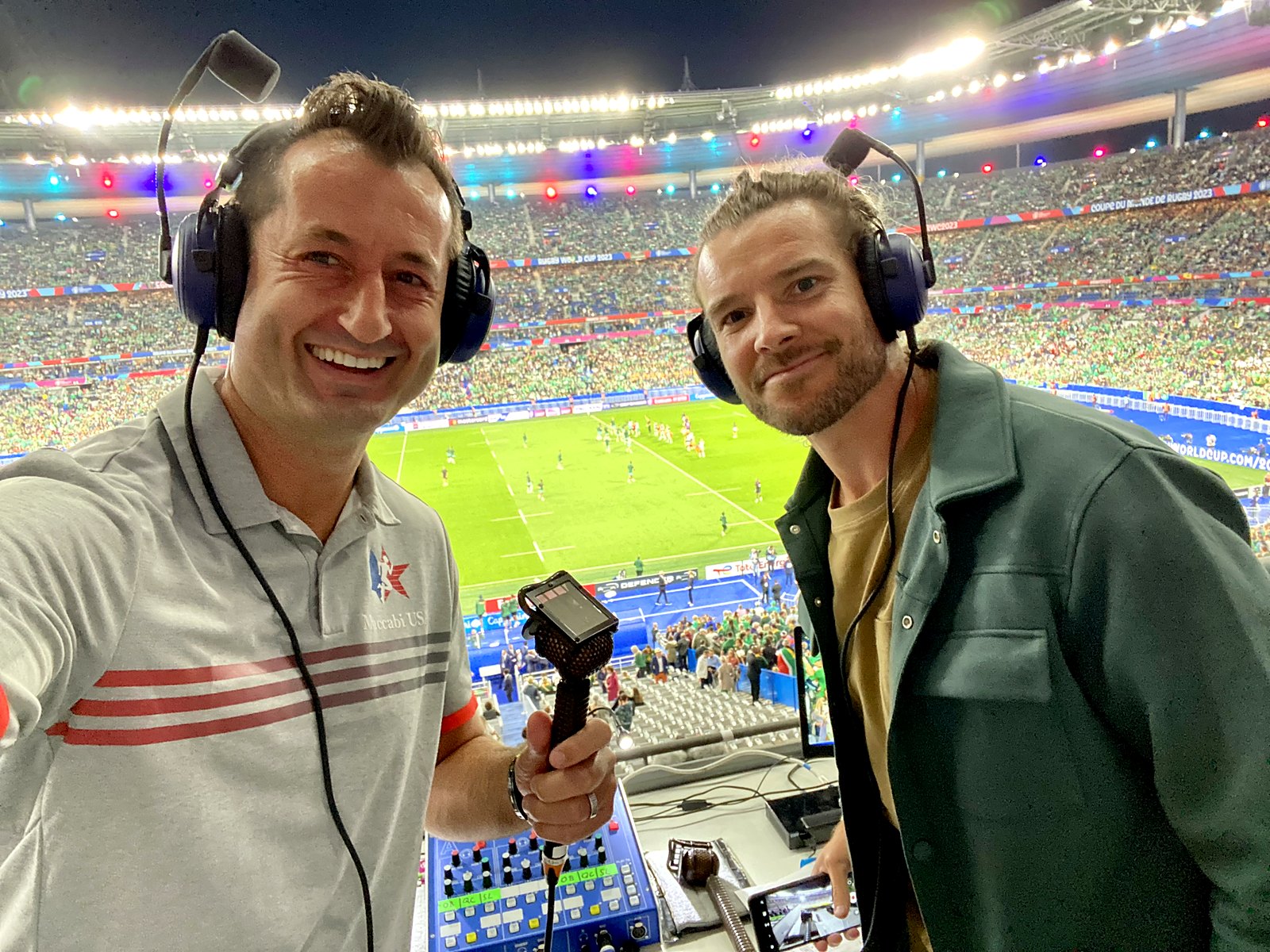
I didn’t grow up planning to be a commentator. I grew up in Cape Town playing rugby, and I went on to play for the USA Sevens team, earning 54 caps between 2007 and 2009. When my playing days were winding down, someone handed me a microphone. I had zero experience. I just loved talking, and I loved rugby. That was enough to get me started, and it led to a second career that has taken me to four Rugby World Cups, with my calls airing on ESPN, CBS Sports Network, Fox Sports, NBC and Peacock.
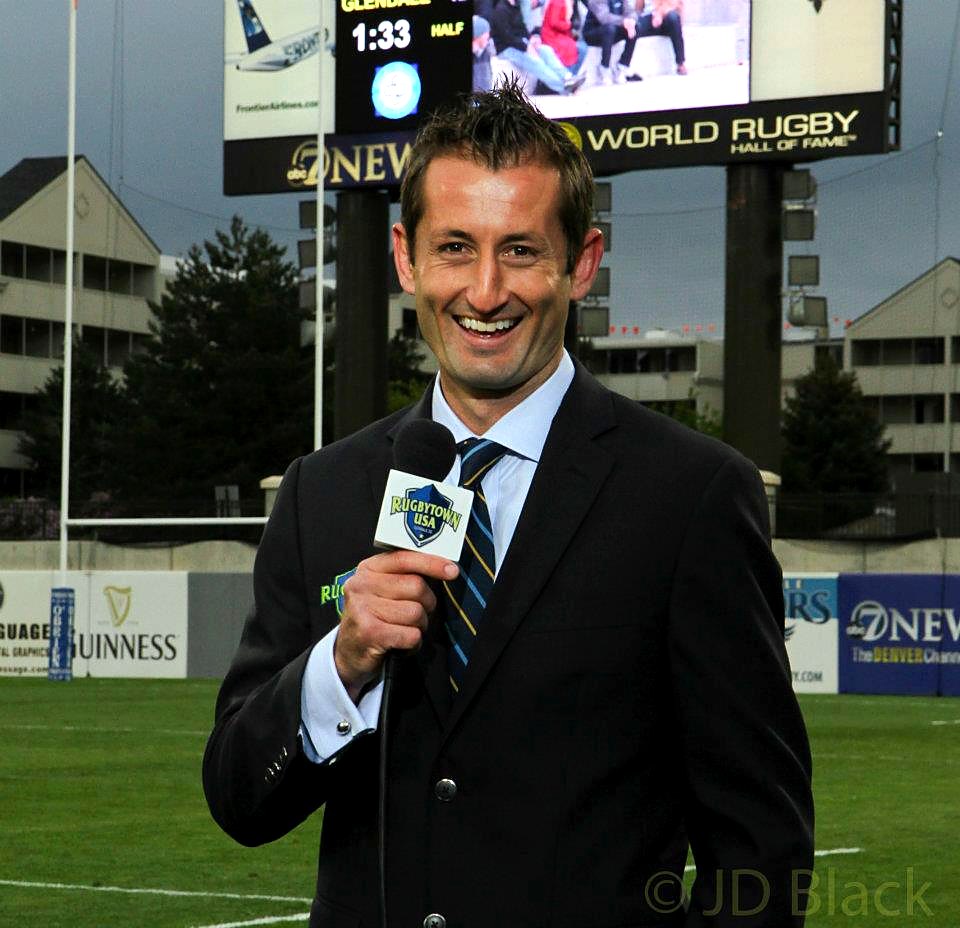
My first time was in 2012 at Infinity Park in Glendale, Colorado. They started me on the sideline, and I did a few interviews and had a great time. After that I got called up to try the booth, and play-by-play felt the most comfortable straight away. I had no background in commentary at all, just a love of the sport, a love of talking and a lot of excitement.
What I didn’t know could have filled a notebook. I spoke too quickly for the broadcast. Nobody had taught me the simple things either, like the ins and outs: how to send the broadcast to a break, how to come back from one, or how to wrap up with the full-time score. I had to figure those out as I went.
People ask me all the time how to become a sports commentator. The honest answer is that there’s no single door. But there is a path, and the people who follow it with discipline get there. This is what I’ve learned from 15 years behind the mic and from training more than 100 commentators through the Broadcast Academy.
What does a sports commentator actually do?
Every sport is different, but almost every broadcast has the same three seats:
- Play-by-play commentator. The lead voice. You describe the action as it happens and guide the viewer through the match.
- Analyst (color commentator). You explain why things are happening: tactics, decisions and what to watch for next.
- Sideline or courtside reporter. You bring news from the field, injuries and substitutions, and you run the interviews.
You’ll also find commentators working in radio, on streaming platforms, at live events over the stadium speakers, and on podcasts and social media. The skills carry across all of them.
Do you need to have played the sport?
No. Former players often become analysts because they can explain what it feels like on the field. I came into broadcasting as a former player, and it helped me read the game. But some of the best play-by-play commentators in the world never played at a high level. What they have instead is preparation, a clear voice and a love of the sport.
Do you need a degree?
No. A degree in journalism or communications can help, but broadcasters hire people who can deliver on air. Your demo reel and your reputation matter far more than a certificate.
The skills that matter most
- Preparation. Great commentators know both teams inside out before the first whistle: names, numbers, form and the stories behind the match.
- Clarity. Viewers should always know the score, the time and who has the ball.
- Storytelling. Facts are everywhere. Your job is to give them meaning at the right moment.
- Timing and restraint. Knowing when to stop talking and let the moment breathe.
- Pronunciation. Getting a player’s name right is a sign of respect, and audiences notice.
- Teamwork. You’re one part of a broadcast team with producers, directors and a co-commentator.
Pronunciation is something I take real pride in. I do as much homework as I can, all week leading into a weekend fixture, so that every name is right when it matters.
What helped me improve the most: learning from the best
My biggest leap came when I joined the Sevens World Series. They needed a South African accent, someone who understood the North American market, and a former player. I was lucky enough to be all three.
For a decade I traveled the world with the Series, and over the years I’ve worked with some remarkable commentators on the Sevens World Series and at several Rugby World Cups, including Rupert Cox, Sean Maloney, Rikki Swannell, Jamie Lyall, Keith Quinn, Wyn Gruffydd, Hugh Cahill, Gareth Rees, Maggie Alphonsi, Rob Vickerman, Karl Te Nana, Philippa Tuttiett, Nolli Waterman, Ollie Phillips, Tom Mitchell, Rachael Burford, Melodie Robinson, Sue Day, Jack Zorab, Joe Byrnes, Tiana Penitani, Mark Robertson, Madison Hughes, Zack Test, Ghislaine Landry, Dan Norton, Andrea Burk, Ruby Tui, Ken Laban and Greg O’Shea. One of my favorites to work with was the late Willie Los’e, the New Zealand-born former Tonga captain who became one of the great voices of the game. We worked so well together, and he was a great friend: great energy, great vibes, and he loved a cold jar, which we enjoyed together on tour.
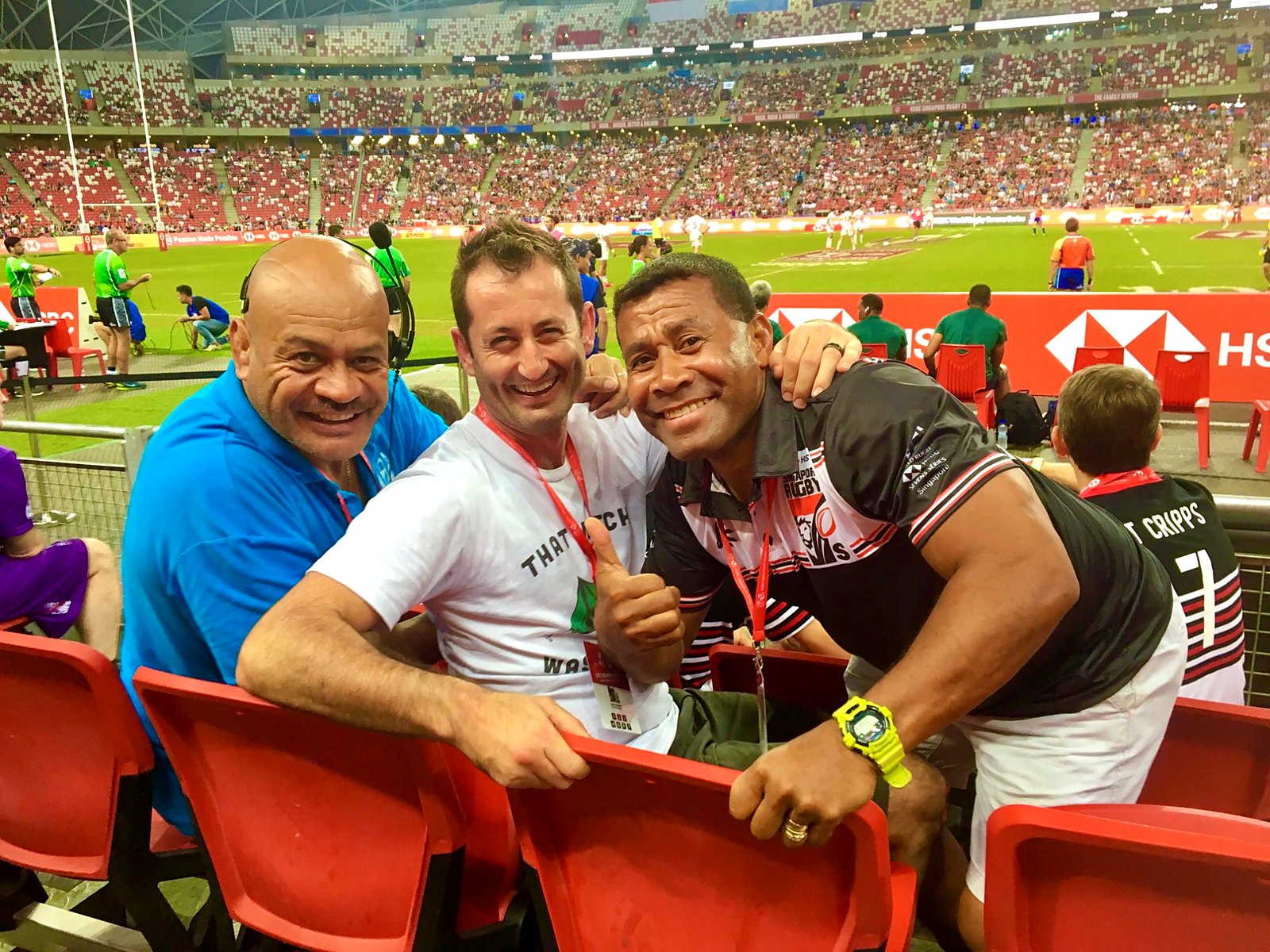
If you want to get better fast, surround yourself with people who are better than you. Listen to how they prepare, how they hand over to each other, and how they let big moments breathe.
My match-week routine
Say I’m calling an international on the weekend. This is how my week looks:
- From Monday: I start collecting player information on both squads. By then you’ll know the referee and the venue, so I research those too, along with the rivalry between the two teams or countries. I keep a manila folder for each team and take a really in-depth look at both sides.
- When the teams are announced, usually a couple of days before the match: I narrow my focus to each side’s match 23 and go really deep on those players.
- Pronunciations: I get them straight from the team manager or from the players themselves.
- Storylines: I build a list of the stories I want to tell during the game, the ones that help promote the sport around the world.
By match day, my notes are set up and I can focus on calling the game.
On match day
- Several hours before kickoff, I arrive at the stadium and meet my producer and director. We go through the rundown of the broadcast in detail, including any last-minute changes to the pre-match build-up, halftime or post-match. We look at the footage they’ll show in the build-up, at halftime and after the final whistle, and go through any advertising reads.
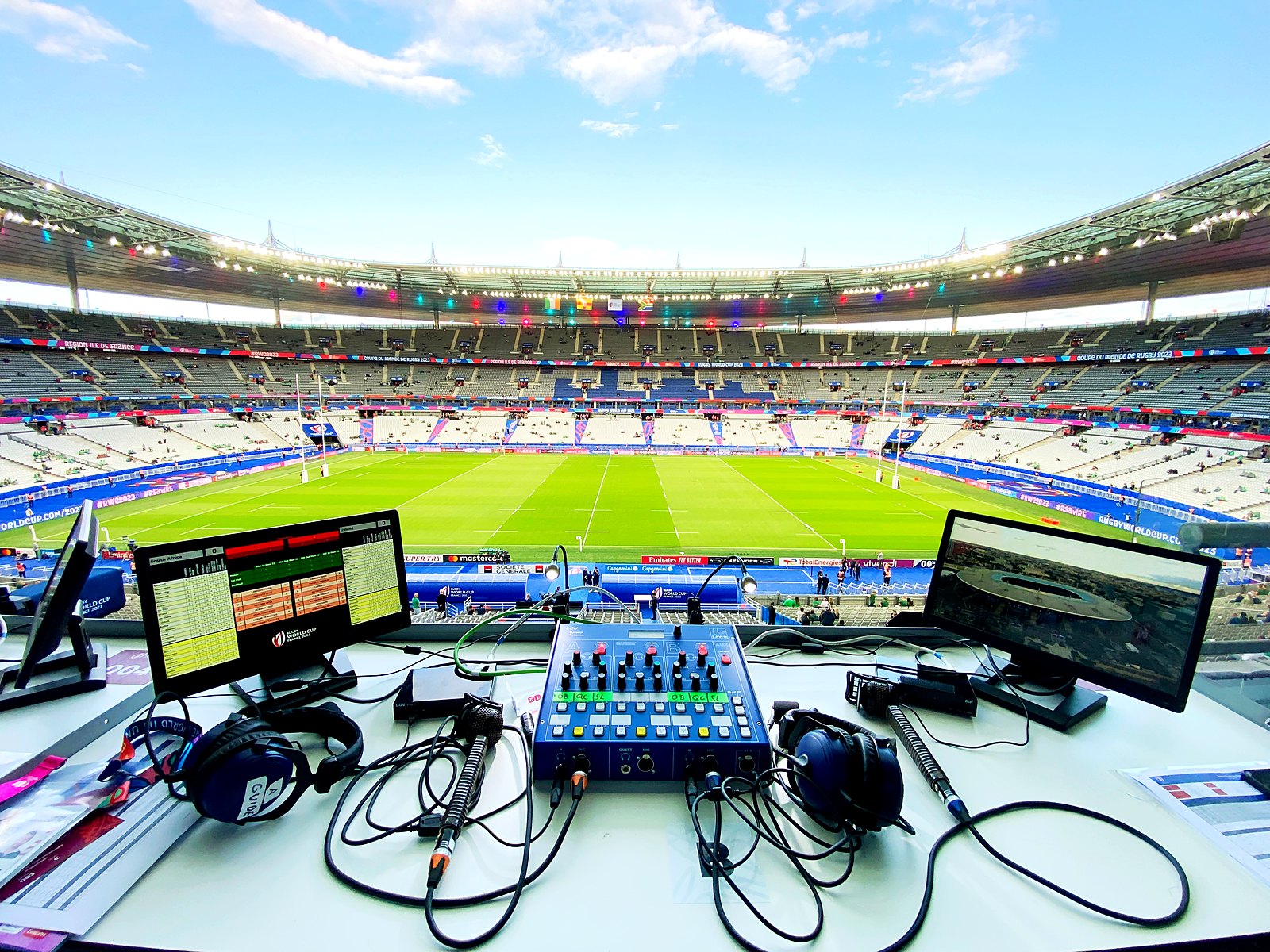
- Up to the booth: I get familiar with the booth and do an audio test with the production team. Once everything is working, my co-commentator and I may rehearse the open with the producer and director.
- Down to the field: I walk around, chat with the coaches from both sides during the warm-ups, talk to a player or two for any last-minute insights, and capture some content for social media.
- Back in the booth: I lay out my notes so they’re easy to read on the desk, whatever the setup is, and go over everything I’ve prepared.
- Then I rest my voice and get excited to call a big game.
How to practice commentary at home
You don’t need a broadcast booth to start. You need a microphone, a match replay and the discipline to listen to yourself.
- Mute a replay and call it. Record yourself, then listen back the next day. You’ll hear things you didn’t notice at the time.
- Practice the three seats. Do one session as play-by-play, one as analyst, and one where you script a 60-second sideline report.
- Prepare like it’s real. Build a spotting board (a one-page sheet of players, numbers and notes) for every practice match.
- Read out loud every day. It builds breath control and makes your delivery smoother.
- Get feedback. Share clips with people who will be honest with you.
Build a demo reel
I tell every commentator the same thing: make a reel. Keep it very short, two to three minutes, with your voice on it. You don’t need to have called a professional game. Find a match on YouTube, mute the audio and commentate it yourself, then put together your best calls. Say which role you’re after, too. Your reel is your business card, the thing you send to people when they’re looking for commentators.
How to get your first commentary job
Start where the opportunities are, and say yes to them:
- Local club and school games
- College and university matches
- Livestreamed tournaments and community events
- Stadium announcing
- Local and student radio
Every match you call is another rep and another clip for your reel. Introduce yourself to tournament organizers and producers, and be easy to work with. Most of my opportunities came through people I met along the way.
I started by volunteering. I called USA Rugby events, including the Club Sevens National Championships, simply to get more games under my belt and learn how the broadcasting world works. My first paid job came from Infinity Park and the City of Glendale, Colorado, thanks to Patrick Guthrie. I still call the RugbyTown Sevens there every year. Glendale has been a remarkable partner, and I feel privileged to have been given that opportunity.
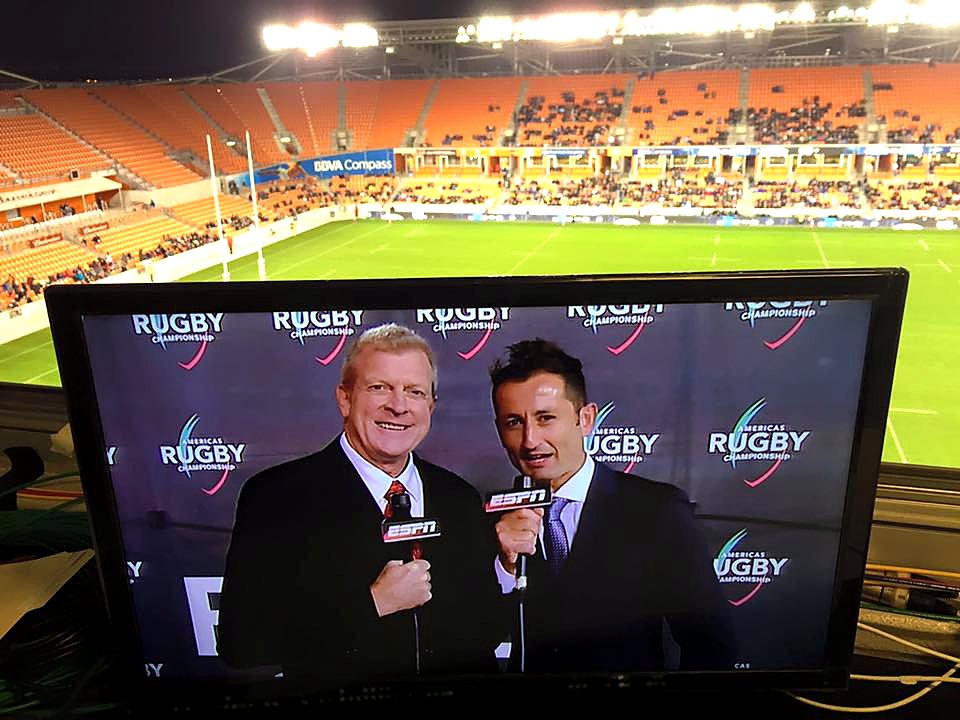
Even working commentators keep training. Sez Naiqama, a former Wallaroos international, was already commentating on the SVNS Series when she joined my Mentorship Program to keep practicing ahead of her major events. I’ve worked alongside her a few times, and she does a wonderful job. Other Academy graduates have gone on to call major events too.
Graduates of the Broadcast Academy, aged 14 to 70 and from more than 30 countries, have taken this path, and more than 35 of them now work in paid commentary roles. In 2026 alone, more than 25 graduates called matches at the Collegiate Rugby Championship.
Where the path can lead
The biggest game I’ve called was South Africa against Ireland at the 2023 Rugby World Cup, in front of a sold-out Stade de France. It was a remarkable game, so much fun to call, and truly epic.
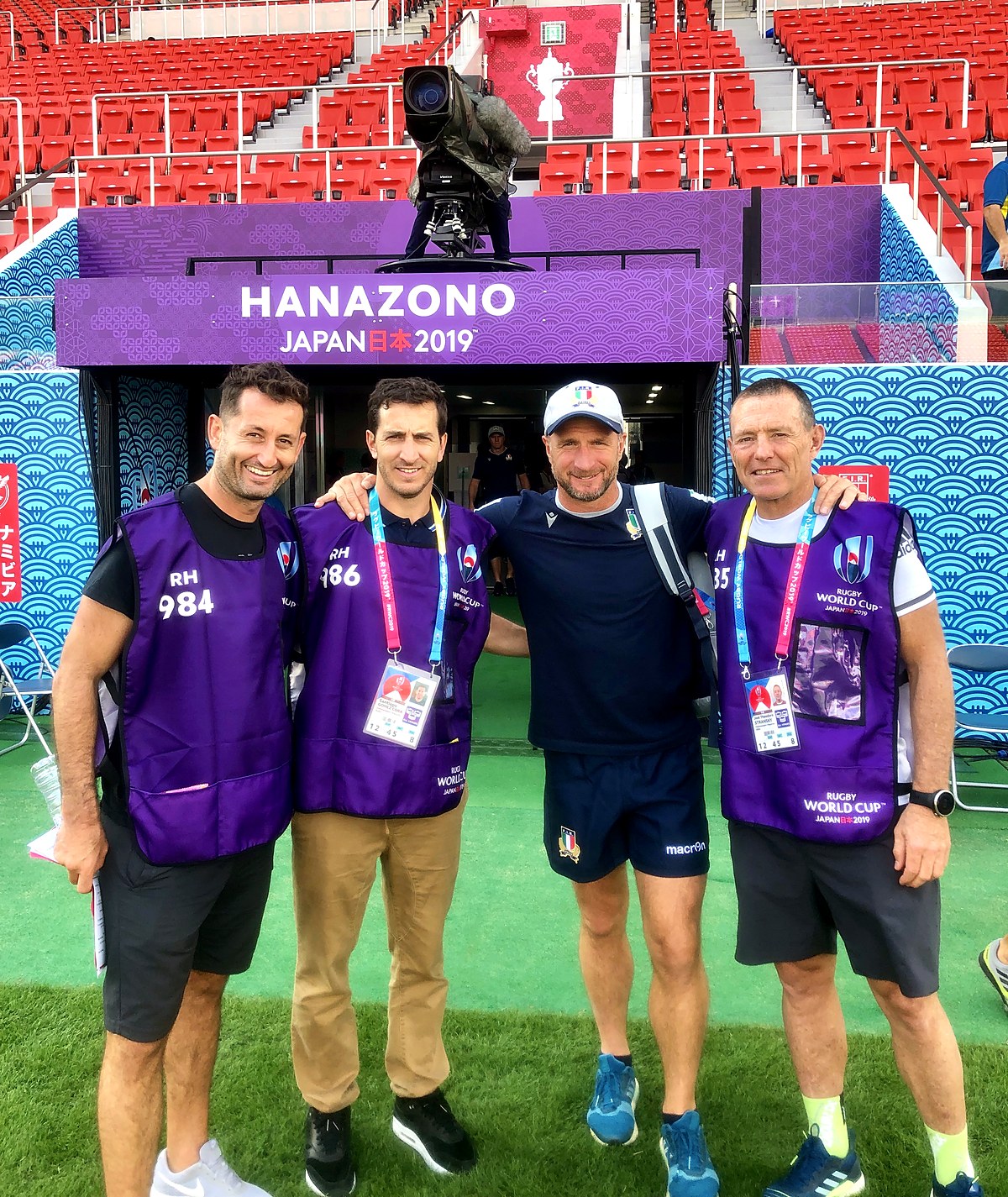
My favorite memory goes back to the 2019 Rugby World Cup in Japan, where I worked alongside Joel Stransky for the whole month. As a young kid growing up in South Africa, I watched Joel kick the winning drop goal for the Springboks in the 1995 final. Sitting next to him in the commentary box years later was truly remarkable.
My advice if you’re starting out
Practice as much as you can. Listen to the commentators you like best, but don’t mimic them. Understand how they call a game and which elements work really well, then put it in your own voice and your own rhythm. You bring your own experience to the table, and everyone is unique when they come into the commentary world. Above all, use your energy and your excitement. You want that to come through in the broadcast.
Your next step
If you’re serious about becoming a sports commentator, the fastest way to improve is structured training and honest feedback.
Want the rugby-specific version? Read How to Become a Rugby Commentator.
Ready to start practicing? Read How to Practice Commentary at Home: 10 drills you can do this week.
Frequently asked questions
How long does it take to become a sports commentator?
It depends on how much you practice. Commentators who call and review matches every week improve fastest, and many get their first paid opportunities once they have a strong demo reel from real matches.
Can I become a sports commentator without experience?
Yes. I started with zero experience, just a love of talking and a love of rugby. Everyone starts somewhere. Begin with local games, livestreams and student radio, record everything, and build from there.
What equipment do I need to practice commentary?
A computer, a decent USB microphone and headphones are enough to practice on replays and record your first demo reel.
Do sports commentators need to know more than one sport?
It helps, but most commentators build their reputation in one sport first. The core skills (preparation, clarity, storytelling and timing) work in any sport.