
10 drills from a Rugby World Cup commentator
By Dallen Stanford, Rugby World Cup commentator and founder of the Broadcast Academy
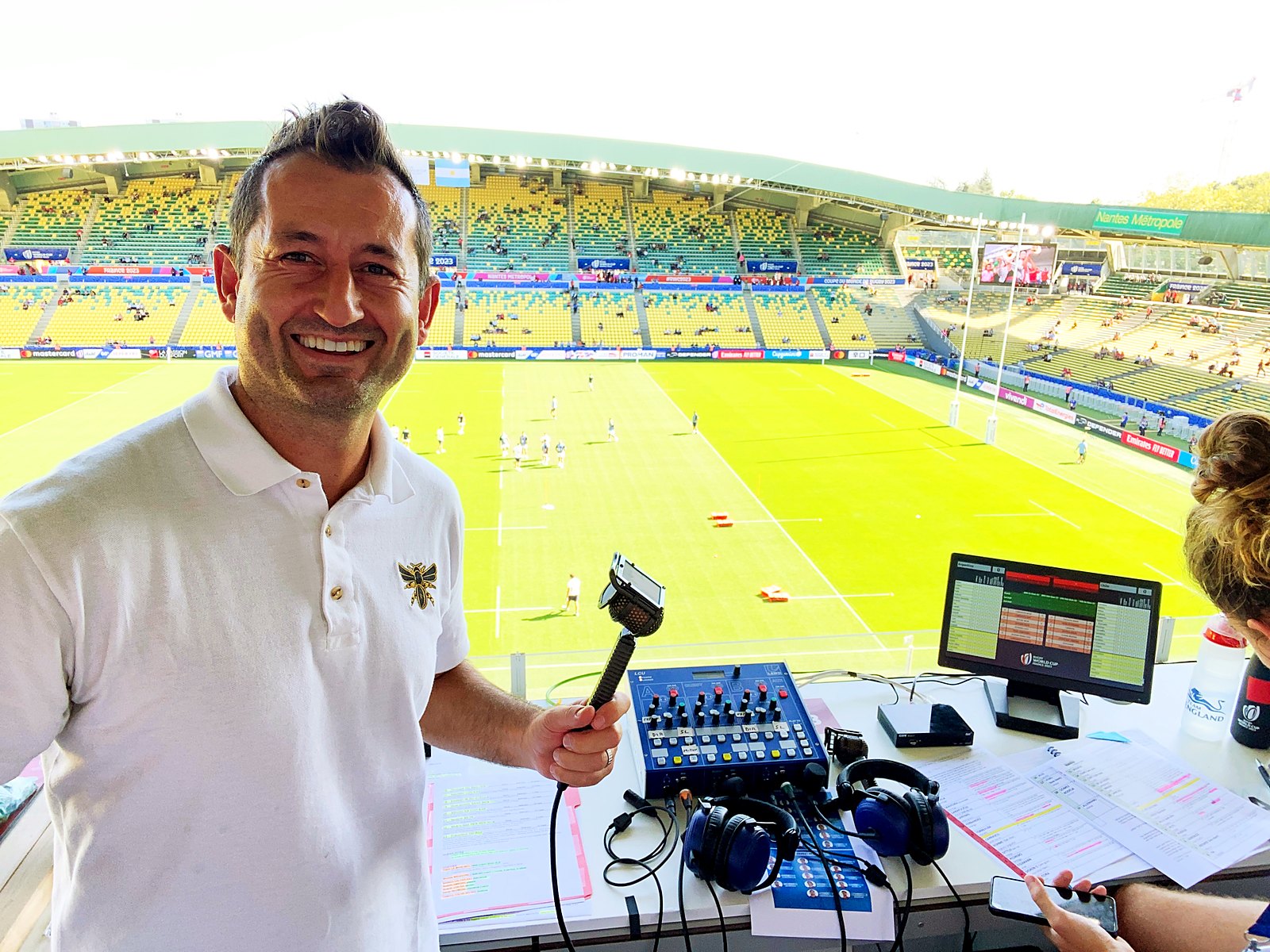
When I started in 2012, I had zero experience. I just loved talking, and I loved rugby. What I didn’t have was anywhere to practice, so I learned live on air, and you could hear it. I spoke too quickly, and nobody had taught me how to go to a break, come back from one or wrap up with the full-time score.
You don’t have to learn that way. Almost everything a commentator does can be practiced at home with a laptop, a microphone and a match replay. The commentators I’ve trained who improve fastest aren’t the most naturally gifted. They’re the ones who practice a little every week and listen back honestly.
So how did I fix speaking too fast? By listening back. You only recognize where you are and how you sound when you hear yourself, and critiquing your own footage is vitally important. Sometimes you’ll cringe at your own voice, or at something you said. That’s part of it. The more games you call, the more comfortable you get with your speed, the excitement you bring and the energy in your voice.
What you need
You don’t need a studio. You need:
- A laptop or tablet to play the match.
- A microphone. A decent USB microphone is ideal, but your phone’s voice recorder is fine to start.
- Headphones, so the match audio doesn’t bleed into your recording.
- A quiet room. Soft furnishings (a couch, curtains, a closet full of clothes) make your voice sound cleaner.
- A notebook or a one-page spotting board for your preparation.
- Room to stand. Standing up is vitally important when you commentate, even at home. It changes your breathing, your energy and the way you sound.
Step 1: Pick the right matches
Start with full matches, not highlights. Highlights are all big moments, but most of commentary is the quiet minutes in between, and that’s where beginners struggle.
- Choose matches you can find in full on YouTube or a streaming service.
- Mute the audio so you can’t lean on the original commentators.
- Mix it up: a match you know well, a match you’ve never seen, and one from a league or country you don’t follow. The last one forces you to prepare.
Step 2: Prepare like it’s a real broadcast
Practice the way you’ll work. Before you press play:
- Build a spotting board: one page with both teams’ players, numbers, positions and a note or two on each.
- Write a pronunciation list. Look up every name you’re unsure of and write it the way it sounds.
- Pick three storylines you want to tell during the match.
- Write your open: the first 20 seconds, when you welcome viewers and set the scene.
- Make a word list. I often write down a lot of different adjectives to use during a game, so I’m not repeating the same few words all match. Go into every call armed with words and information you can use here and there.
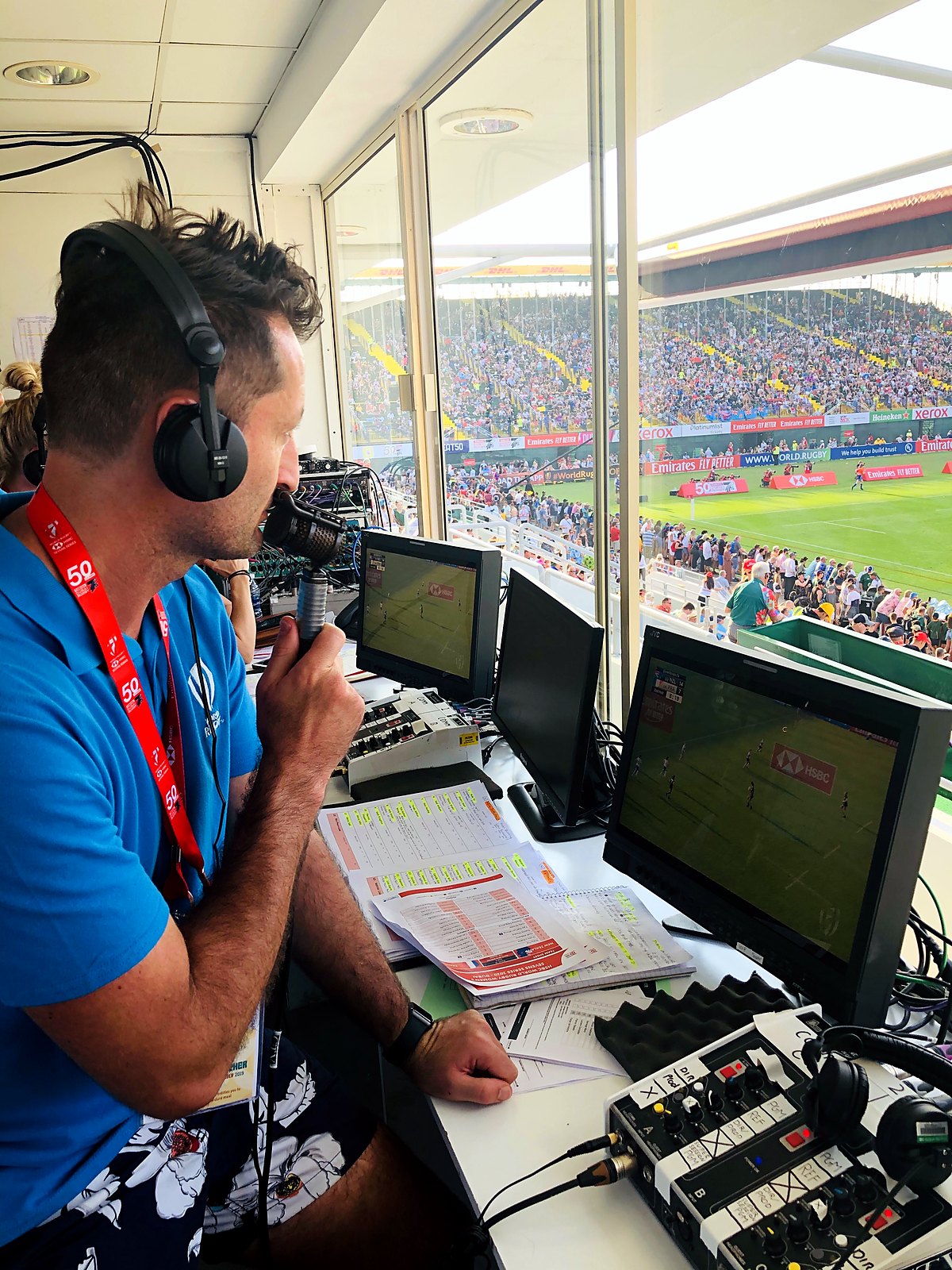
10 commentary drills you can do at home
1. The 10-minute call
Call the first 10 minutes of a match, record it and stop. Short sessions keep your focus sharp, and 10 minutes is easy to review.
2. The score and clock reset
Every few minutes, give the score, the time and the situation, as if a viewer has just tuned in. Set a timer to remind you at first. Viewers should never have to wonder what the score is.
3. The name drill
Pause the match on a random frame and name every player you can see within five seconds. This builds the instant recognition you need when play moves fast.
4. The silence drill
Find the biggest moment of the match (a try, a goal, a winning score). Call it with one strong line, then stop talking for five seconds and let the crowd tell the story. Silence is one of a commentator’s most underused tools.
5. Ins and outs
Practice the parts of a broadcast that aren’t the action: going to a break, coming back from one, welcoming viewers at the start and wrapping up with the full-time score. These are the things nobody taught me, and they’re easy to rehearse at home.
6. The pace check
Record two minutes of play-by-play and listen back. Are you rushing? Are you breathing? Slow down between phases and speed up when the action does. Your pace should follow the game.
7. The analyst pause
Pause after a key moment and explain in 20 seconds why it happened. One clear point beats three rushed ones.
8. The 60-second sideline report
Write and record a 60-second update from the sideline: an injury, a substitution or a coach’s halftime message. Then interview a friend or family member as if they were a player.
9. Commentate with a partner
Call a match with a friend over a video call, one on play-by-play and one as the analyst. Practice handing over to each other, and practice not talking over each other.
10. Read out loud every day
Read a few minutes of anything out loud: a match report, a news story, a book. It builds breath control and makes your delivery smoother.
Bonus: practice every format of your sport
When I practiced, I called both sevens and fifteens. They’re two very different games, and they need different skill sets: sevens is fast, with tries coming quickly and very little time to fill, while fifteens gives you longer phases, more set pieces and more space for analysis. Whatever your sport, practice on its different versions. It will make you a far more versatile commentator.
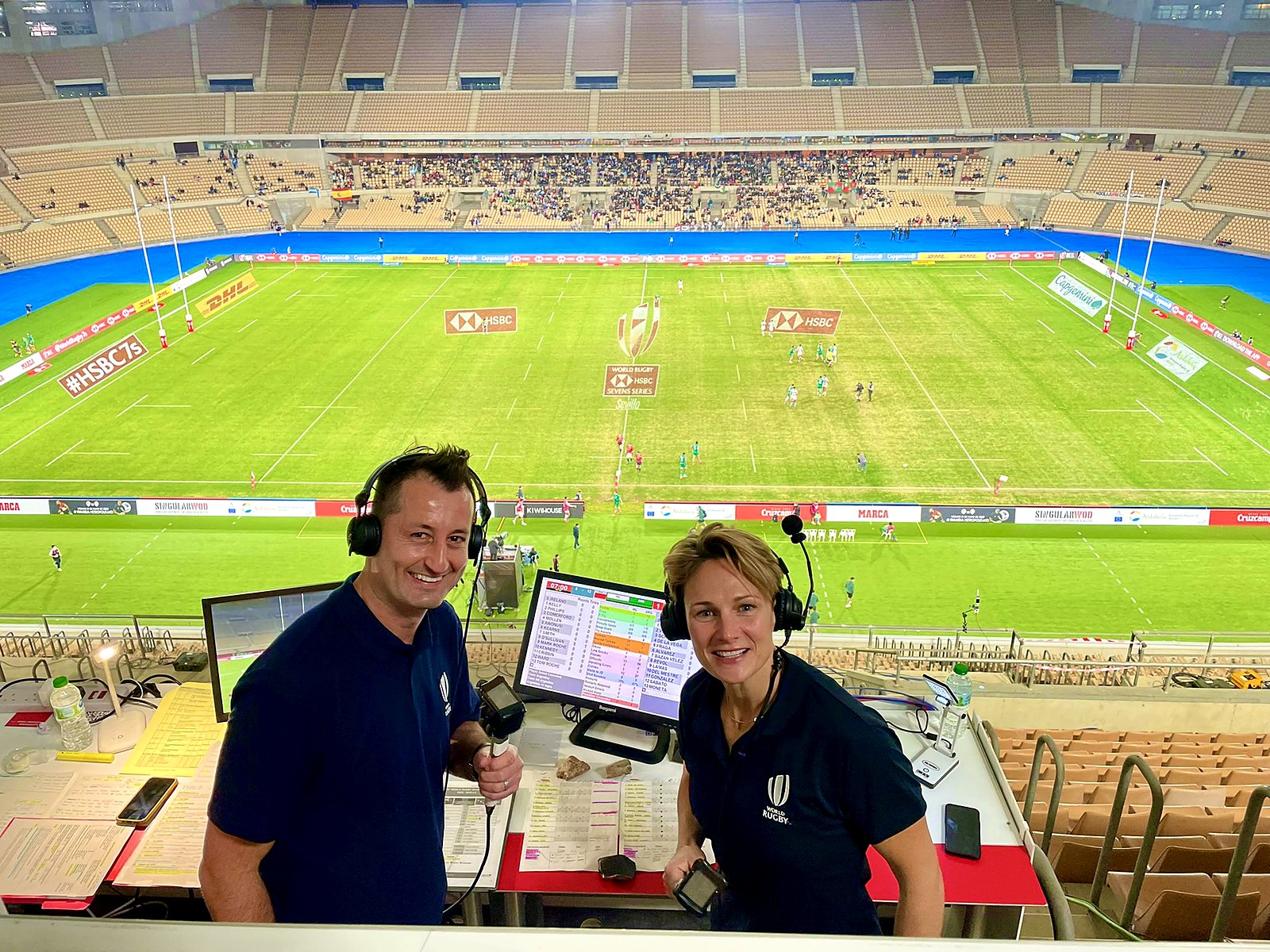
How to review your recordings
Recording yourself is only half the work. Listen back the next day, when you can hear yourself like a viewer would. Check:
- Did I give the score and the time often enough?
- Did I get every name right?
- How many filler words (“um,” “you know”) did I use?
- Did I talk over the big moments?
- Could someone with their eyes closed picture what happened?
- Did my energy match the moment?
Pick one thing to fix in your next session. Trying to fix everything at once doesn’t work.
A simple weekly practice plan
| Day | Practice |
|---|---|
| Monday | Prepare a spotting board and pronunciation list for a match |
| Tuesday | Call the first half and record it |
| Wednesday | Listen back and pick one thing to fix |
| Thursday | Call the second half, focusing on that one thing |
| Friday | Drills: silence, ins and outs, sideline report |
| Weekend | Watch a live match and listen closely to the professionals |
Two or three focused hours a week is enough to hear real improvement within a month.
Look after your voice
Your voice is your instrument. Warm up before every session, drink water, rest it after long sessions and don’t shout. Projection comes from breath support, not volume, which is why I always stand when I commentate.
Turn your practice into a demo reel
Every recording is raw material for your reel. When you call a moment you’re proud of, save it. Once you have five or six, put together a reel of two to three minutes, say which role you’re after, and start sending it out. That’s how home practice turns into your first job.
It works. A handful of Broadcast Academy graduates have improved tremendously this way. They took Broadcast Foundations first, then the Broadcast Intensive, then kept practicing at home on their own, and they’re now in my Mentorship Program. One of them, Danny Stephens, has landed his first international rugby match as a commentator: Lithuania vs Germany in the Rugby Europe International Championships on October 31, 2026. That’s pretty special.

Your next step
Practicing on your own is a great start. Practicing with structure and honest feedback is faster.
Read next: How to Become a Sports Commentator and How to Become a Rugby Commentator.
Frequently asked questions
How can I practice sports commentary at home?
Mute a full match replay, call it into a microphone, and listen back the next day. Prepare a spotting board and pronunciation list first, and focus on one thing to improve in each session.
What equipment do I need to practice commentary?
A laptop, a microphone (even your phone to start) and headphones are enough. A quiet room with soft furnishings makes your recordings sound cleaner.
How often should I practice commentary?
Two or three focused hours a week, spread over several short sessions, is enough to hear real improvement within a month.
Should I practice with highlights or full matches?
Full matches. Highlights are all big moments, but most commentary happens in the quieter minutes between them.